
"coffee cultivation origins"
10000 article(s) found

A brief introduction to the cultivation of boutique coffee beans in the fragrant Lazmus Manor, geographical location, climate and altitude
Authentic Colombian coffee is brewed with a color as clear as emerald. It is like the masterpiece of the greatest tune, which matches sour, bitter and sweet just right. After drinking, the fragrance fills the whole mouth. The aroma comes out of the nose again. It is so soft and arrogant that it occupies your taste buds, your mind and even your soul as quickly as possible. Let you in

A brief introduction to the Origin and Development of Coffee Variety cultivation in Saint Roman Manor, Costa Rica
During the harvest season, the sugar content of the fruit is measured by the sugar meter (Brixmeter) often equipped by the wine industry, and the best time and treatment are determined according to the brix sugar content. Only those with more than 20% sweetness will be exposed to the sun. The Brix value of general fruit is 14 for apple, 12 for lemon and 18 for passion fruit, but the coffee cherry of Fenghuang Manor can reach 21-22.

The Origin of Green Top Bourbon in St. Helena, England
Britain made every effort to develop the tea cultivation industry in India, but seeing the coffee industry in the Netherlands and France booming, the British East India Company also shipped a batch of mocha coffee seeds (round bourbon) from Yemen. It was planted on the island of St. Helena in the South Atlantic Ocean on the west coast of Africa in 1732. Although the British did not cultivate it wholeheartedly and let it fend for itself, it actually survived in a harsh environment.
Introduction to the origin of coffee knowledge coffee
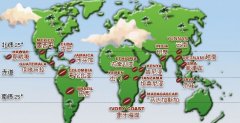
Coffee belt (coffee belt) coffee is mainly grown in tropical and subtropical regions, and coffee is mainly produced in more than 70 countries in the world. Most of them are distributed between 25 degrees of the Tropic of Cancer. According to the statistics of the Food and Agriculture Organization of the United Nations in 1976, coffee is grown in 76 countries and regions in the world, with an area of 118.845 million mu, of which Latin America is 64.86 million mu, accounting for the world's acreage.

Coffee Originated from Ethiopia or Arabia Brand Features Flavor Taste Introduction
Ethiopian coffee is still divided into two categories: wild coffee and artificial coffee. Wild to the southwest of the season horse area dominated by low harvest. The yield of coffee beans per hectare on artificial plantations is 500600 kg. According to statistics, Ethiopia now has more than 400,000 hectares of coffee gardens, mainly distributed in the season.

Description of Arabica Coffee Flavor in Africa and Zimbabwe A brief introduction to the origin of African bean Arabica coffee
High-quality Arabica coffee beans cater to the needs of foodies. Coffee cultivation in Zimbabwe began relatively recently, in the 1960s, when farmers in southern Africa set up coffee plantations. Coffee cultivation in Zimbabwe is mainly concentrated in the eastern highlands near Mozambique, mainly by Chimanim

The origin of geisha coffee beans-A brief introduction to the manor and variety cultivation of coffee beans
In order to highlight the characteristics and aroma of this bean, the baking degree is on the verge of two explosions, and two explosions and one sound are more commonly used baking degrees, which can give play to the characteristics of the beans themselves. If they are too shallow, they will produce miscellaneous smells. If they are too deep, they will lose the aroma of flowers and fruit acidity. Of course, this should be adjusted according to the characteristics of coffee beans and the roaster's understanding of the beans themselves.

Geographical Distribution cultivation techniques of Coffee trees
Coffee grows mostly in countries with alpine terrain between the Tropic of Cancer and the Tropic of Cancer. It is native to tropical Africa and is introduced and cultivated in South and Southwest China. [2] the cultivation technology editor requires that the origin of the coffee tree [4] is in Ethiopia in Africa. In botany, the coffee tree belongs to the evergreen tree of the coffee subgenus of Rubiaceae, and the so-called coffee bean is actually the fruit of the coffee tree.

Geographical Distribution cultivation techniques of Coffee trees
Coffee grows mostly in countries with alpine terrain between the Tropic of Cancer and the Tropic of Cancer. It is native to tropical Africa and is introduced and cultivated in South and Southwest China. [2] the cultivation technology editor requires that the origin of the coffee tree [4] is in Ethiopia in Africa. In botany, the coffee tree belongs to the evergreen tree of the coffee subgenus of Rubiaceae, and the so-called coffee bean is actually the fruit of the coffee tree.

The requirements of geographical environment for the cultivation techniques of coffee trees
The cultivation technology editor requires that the origin of coffee tree [4] is in Ethiopia in Africa. In botany, coffee trees belong to the evergreen trees of the subgenus Rubiaceae, and coffee beans, commonly known as coffee beans, are actually the seeds of the fruit of coffee trees. They are called coffee beans only because they are shaped like beans. Climate is the decisive factor for coffee cultivation. Coffee trees are only suitable for growing in the tropics or

A brief introduction to the History and Culture of the Origin and Development of Fine Coffee beans in Huilan, Colombia
Flavor: full of acidity, caramel, sweet nuts, chocolate, red wine flavor, admirable fruit flavor. Palate: full viscosity, caramel sweetness, supple and pleasant fruit acid. Roasting degree: medium and deep roasting Columbia Huilan (Colombia huila): located in southwestern Colombia, is one of the major coffee cultivation areas. Because it's all over Huilan area.

History of coffee cultivation in Gukeng, Taiwan
At a time when the ancient pit on the Tropic of Cancer is full of sunshine and rainfall, the Taiwan native coffee produced is sweet, fragrant and not bitter, and has its own local flavor. It belongs to the best coffee in the world. Gukeng Coffee originated in Huashan area, Gukeng Township, Yunlin County, Taiwan. At the time of the ancient pit on the Tropic of Cancer, sunshine and rainfall are abundant, and the Taiwan native coffee produced is sweet and fragrant.

What is the origin of coffee beans in Papua New Guinea? The cultivation of coffee beans?
Professional baristas please follow the coffee workshop (Wechat official account cafe_style) in Papua New Guinea (Papua New Guinea), about 75% of coffee products come from small local farmers.

The news about coffee the planting conditions of coffee trees the origin of coffee beans
The origin of the coffee tree is Ethiopia in Africa. In botany, coffee trees belong to the evergreen trees of the subgenus Rubiaceae, and coffee beans, commonly known as coffee beans, are the seeds of the fruit of coffee trees, just because they are shaped like beans, so they are called coffee beans. Climate is the decisive factor for coffee cultivation. Coffee trees are only suitable for growing in the tropics or subtropics, so latitude 25 is south and north.

The Origin of Coffee Culture in Green Top Bourbon in St. Helena, England
Britain made every effort to develop the tea cultivation industry in India, but seeing the coffee industry in the Netherlands and France booming, the British East India Company also shipped a batch of mocha coffee seeds (round bourbon) from Yemen. It was planted on the island of St. Helena in the South Atlantic Ocean on the west coast of Africa in 1732. Although the British did not cultivate it wholeheartedly and let it fend for itself, it actually survived in a harsh environment.

The origin of Cuban Crystal Mountain Coffee Why Crystal Mountain is also known as "the Blue Mountain of Cuba"
The history of the cultivation of Cuban coffee in 1748, coffee was introduced into Cuba from Domiga, but the coffee industry did not begin until 1791 after the French immigrants entered. By 1827, there were about 2000 coffee farms on the island. Coffee surpassed the sugar industry as a major export product. Due to historical and political reasons, the ownership of coffee cultivation experienced the process of private ownership and nationalization. 1953-19

Introduction of Kenyan coffee beans
Kenya is bordered to the north by Ethiopia, the origin of Arabica coffee trees, but it was not until the beginning of the 20th century that coffee cultivation began. In the 19th century, missionaries introduced Arabica trees from the leaves, but did not plant them in large quantities. It was not until 1893 that coffee was cultivated on a large scale because of the introduction of Brazil's ancient bourbon seeds. That is to say, Kenyan coffee is of Brazilian origin, because of water.

Introduction to the history of coffee cultivation in Venezuela what are the coffee brands in Venezuela
Professional Coffee knowledge Exchange more information on coffee beans Please follow the coffee workshop (official Wechat account cafe_style) the first taste of Coffee made me feel amazing. Although Venezuela introduced coffee trees from Martinique in 1730, coffee production was almost abandoned at the height of the oil industry. Fortunately, coffee cultivation has begun to recover recently.
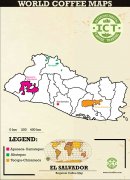
El Salvador coffee bean producing area Santa Ana, the volcanic country of El Salvador coffee cultivation.
Coffee is grown more or less throughout El Salvador (well, after all, it's not that big), but there are seven main areas where coffee is grown, all of which are considered different from each other, mainly in terms of altitude and flavor characteristics. According to PROCAF (the National Coffee Institute), it is arranged as follows: Apaneca-Ilamatepec Mountains: located in the west, from 500 elevations
World coffee origin Zimbabwe Zimbabwe
It produces high quality coffee beans. Coffee cultivation in Zimbabwe dates back to modern times, beginning in the 1960s when farmers in southern Africa established coffee plantations. Coffee cultivation in Zimbabwe is concentrated in the eastern highlands adjacent to Mozambique, which are dominated by the Chimanimani Mountains and Nyan to the north.